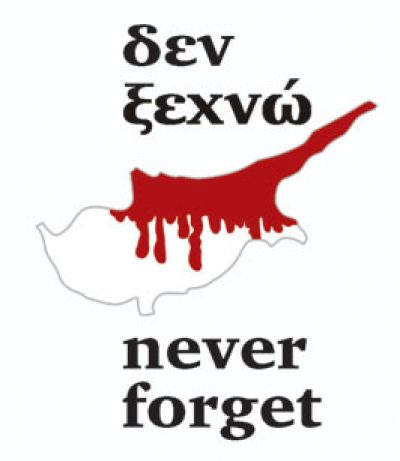
A proposal by Kyriacos Kalattas
DARE AT LAST MR. PRESIDENT
EXPOSE TURKEY BEFORE INTERNATIONAL PUBLIC OPINION
A public proposal to the President of the Republic of Cyprus
On the occasion of his address before the United Nations General Assembly
Kyriakos Kalattas
Citizen of the Republic of Cyprus Displaced from occupied Yialousa
September 2026
Mr. President,
The annual presence of the President of the Republic of Cyprus at the United Nations General Assembly constitutes one of the most important opportunities to present the Cyprus issue internationally. This address should not be confined to general references to the need to resume negotiations, build confidence, or demonstrate the political will of the Greek Cypriot side.
More than fifty years after the Turkish invasion, the Republic of Cyprus must once again place before the international community the true international dimension of the Cyprus issue: the invasion, the continuing military occupation, the forcible displacement of the population, the settlement policy, and the violation of the sovereignty and territorial integrity of an independent Member State of the United Nations and the European Union.[1]
Turkey must not be presented as an external observer or merely a facilitator in an intercommunal dispute. The European Court of Human Rights has held that, by virtue of its military presence, Turkey exercises effective overall control over northern Cyprus and bears responsibility for acts and policies in that area.[2]
We therefore call upon you, from the rostrum of the General Assembly and from every other international forum, to put the following specific questions to Turkey:
A Invasion occupation and international legality
- Under which provision of international law does Turkey justify its continuing military presence in, and occupation of, territory of the Republic of Cyprus?
- Why does it continue to maintain substantial military forces in Cyprus more than half a century after the invasion?
- Why does it fail to implement the United Nations resolutions requiring respect for the sovereignty, independence, territorial integrity, and unity of the Republic of Cyprus, as well as the withdrawal of foreign armed forces?[1]
- If the intervention of 1974 was intended, as Turkey claims, to restore the constitutional order, why did Turkey not withdraw once the lawful constitutional order had been restored?
- Why did it launch the second phase of military operations on 14 August 1974, when the constitutional order had already been restored and talks were under way in Geneva?
- Why did it occupy approximately 37 per cent of the territory of the Republic of Cyprus, including areas where Turkish Cypriots constituted only a small part of the population, if its sole purpose was to protect them?
- If Turkey considers its actions to be consistent with international law, is it prepared to accept their examination by a competent international judicial body?
B The Treaty of Guarantee
- How can Turkey invoke the Treaty of Guarantee when Article IV permitted action solely for the purpose of re-establishing the state of affairs created by the Treaties of 1960?[3]
- How can the seizure of territory, separation, settlement policy, and pursuit of a two-state solution be reconciled with Article II of the Treaty, which prohibits the promotion of either the union or the partition of Cyprus?[3]
- By what logic does a guarantor power, which undertook to guarantee the independence, territorial integrity, and security of the Republic of Cyprus, now use that status to justify division and its military control?
- Is Turkey prepared to accept the jurisdiction of the International Court of Justice regarding the interpretation of its obligations under the Treaty of Guarantee?
C Human rights and the civilian population
- What connection could the purported protection of Turkish Cypriots have had with the documented killings of civilians, the disappearance of persons who came under Turkish control, forcible displacement, and other serious violations of human rights?[4]
- Whom exactly did these acts protect, and under which provision of international law can they be justified?
- Why does Turkey not cooperate fully and effectively to determine the fate of all missing persons and to provide their families with complete information?[4]
- Why are displaced persons prevented from returning to their ancestral homes and freely enjoying their properties?[2]
- Why has the full and effective execution of all relevant judgments of the European Court of Human Rights not been ensured?
- Why was the Third Vienna Agreement of 2 August 1975 not fully implemented, particularly regarding the rights and living conditions of the enclaved people of the Karpas Peninsula?[5]
D Settlement policy and demographic alteration
- Why did Turkey transfer and settle population from Turkey in the occupied areas, thereby altering the demographic composition of Cyprus?
- What connection does the protection of Turkish Cypriots have with the expulsion of Greek Cypriots from their towns and villages and the settlement of other persons in their properties?
- Why does Turkey not publish full and reliable data on the number and status of Turkish nationals who settled in the occupied areas after 1974?
- How can Turkey claim that it seeks a just and viable settlement while continually creating new demographic, political, and property-related faits accomplis?
E Religious and cultural heritage
- What connection does the protection of Turkish Cypriots have with the desecration and destruction of Greek Orthodox cemeteries?
- What connection does it have with the looting, destruction, abandonment, or illicit trafficking of ecclesiastical treasures, icons, mosaics, and other cultural property?
- What connection does it have with the arbitrary change of use of churches and monasteries and their conversion into mosques, warehouses, stables, or premises unrelated to their historic and religious character?
- Why did Turkey, as the power exercising effective overall control over the occupied areas, fail to ensure the protection of the religious and cultural heritage of all Cypriots?
- If its intervention was intended to protect one community, why was it accompanied by extensive alteration of the religious and cultural character of the occupied areas?
F Historic names and place names
- What connection does the protection of Turkish Cypriots have with the systematic replacement of the historic names of towns, villages, communities, and localities in the occupied areas?
- What security need is served by erasing names that form part of the history and cultural identity of Cyprus?
- Why is an attempt being made to erase, even from the map, the historic presence of the lawful inhabitants of the occupied areas?
- Do not the alteration of historic place names, the destruction or change of use of monuments, the settlement policy, and the expulsion of the population constitute interconnected evidence of broader demographic and cultural alteration?
G Famagusta and United Nations decisions
- Why does Turkey take action in the fenced-off area of Famagusta in breach of the status prescribed by Security Council resolutions 550 and 789?[6]
- Why does it not contribute to placing the fenced-off area under United Nations administration, as requested by resolution 550, so as to enable the return of its lawful inhabitants?[6]
- Why does it not comply with resolutions 541 and 550, which deem the secessionist declaration legally invalid and call upon States neither to recognise nor to facilitate the secessionist entity?[7]
H Turkish Cypriots and Ankara’s control
- If Turkey is genuinely interested in protecting Turkish Cypriots, why does it interfere in the political processes of the Turkish Cypriot community?
- Why does it not allow Turkish Cypriots to decide their future freely, without political, military, economic, and demographic control by Ankara?
- Why does it maintain in the occupied areas a political and economic system dependent on Turkey?
- Does Turkey genuinely protect Turkish Cypriots, or does it use their community as a means of maintaining strategic control over Cyprus?
I Form implementation and guarantees of the settlement
- Why does Turkey seek to transform an international issue of invasion and occupation into an internal dispute between two communities?
- Why does it promote a two-state solution in violation of United Nations resolutions and the internationally recognised basis for a settlement?
- By what right does it demand the sovereign equality of two separate States when the agreed basis and the relevant resolutions refer to one State with a single sovereignty, a single international personality, and a single citizenship?[8]
- Why does it insist on guarantees, unilateral rights of intervention, and a military presence in a Member State of the European Union?
- Is Turkey prepared to commit to a specific and verifiable timetable for the withdrawal of its troops and the abolition of rights of intervention?
- Is Turkey prepared to accept a binding international mechanism for implementing the settlement, with a clear timetable, verification, and consequences in the event of non-compliance?
- Is Turkey prepared to guarantee, under international supervision, the return of displaced persons, the restoration of property rights, and the exercise of fundamental freedoms throughout Cyprus?
J The decisive question
- Does Turkey seek the restoration of international legality and the creation of a genuinely independent, sovereign, and functional Republic of Cyprus, or does it seek to legitimise the faits accomplis of the invasion, occupation, and settlement policy and to maintain its strategic control over Cyprus?
The proposal to the President of the Republic
Mr. President,
These questions should not be raised only once, nor solely from the rostrum of the General Assembly. They must be raised consistently in the United Nations General Assembly and Security Council, in the institutions of the European Union, in the Council of Europe, at international and regional conferences, and in bilateral meetings with Heads of State and Government.
Repeating them does not constitute empty rhetoric. It establishes a consistent, public, and recorded political, legal, and diplomatic demand for accountability regarding the continuing occupation.
For decades, Turkey has promoted its own narrative internationally, while the Republic of Cyprus has often appeared to defend itself over the deadlock in the negotiations and to offer repeated assurances of its readiness to return to the negotiating table. Readiness for substantive dialogue is necessary, but it cannot replace the demand for the implementation of international law and United Nations decisions.
The power exercising effective control over the occupied part of Cyprus cannot be presented as a neutral third party. The Republic of Cyprus cannot be required continually to prove its will for a settlement while Turkey avoids answering for the military occupation, the settlement policy, and the continuing faits accomplis.
Do not confine yourself once again to general appeals. Name the occupation, the settlement policy, and the human rights violations. Highlight the destruction and alteration of the cultural heritage. Demand specific answers and specific acts of compliance.
Legal and historical documentation
- United Nations General Assembly resolution 3212 (XXIX) of 1 November 1974 and Security Council resolution 365 (1974), which endorsed it and called for its Resolution 3212 calls for respect for the sovereignty, independence, territorial integrity, and non-aligned status of the Republic of Cyprus, and for the speedy withdrawal of all foreign armed forces and foreign military presence.
- ECtHR, Loizidou v. Turkey, judgment on the preliminary objections of 23 March 1995 and judgment on the merits of 18 December 1996; ECtHR, Cyprus v. Turkey [Grand Chamber], application no. 25781/94, judgment of 10 May 2001. The Court attributed responsibility to Turkey on account of the effective overall control it exercises over northern Cyprus.
- Treaty of Guarantee of 16 August 1960, Articles II and IV. Article II prohibits activities aimed directly or indirectly at either union or Article IV limits the purpose of any action to re-establishing the state of affairs created by the Treaty.
- ECtHR, Cyprus v. Turkey, 10 May 2001; ECtHR, Varnava and Others v. Turkey [Grand Chamber], applications nos. 16064/90 et al., 18 September 2009. The judgments concern, among other matters, the continuing failure to conduct an effective investigation into the fate of Greek Cypriots who disappeared in life-threatening circumstances.
- Third Vienna Agreement of 2 August 1975, as recorded by the United Nations Secretary-General. It provided, among other matters, that Greek Cypriots remaining in the north would be free to stay and would be given every help to lead a normal life, including facilities for education and for the practice of their religion.
- Security Council resolutions 550 (1984) and 789 (1992). Resolution 550 considers inadmissible attempts to settle any part of Famagusta by persons other than its inhabitants and calls for the transfer of that area to the administration of the United Nations.
- Security Council resolutions 541 (1983) and 550 (1984). Resolution 541 considers the secessionist declaration legally invalid and calls for its withdrawal. Resolution 550 calls upon States not to recognise or facilitate the secessionist entity.
- Security Council resolution 1251 (1999) and subsequent relevant resolutions; Joint Declaration of the two leaders of 11 February 2014, which reaffirms a single sovereignty, a single international personality, and a single citizenship.
Key official sources
- United Nations Digital Library, Security Council resolutions concerning Cyprus: un.org
- United Nations Documents, resolution 541 (1983): un.org/en/S/RES/541(1983)
- European Court of Human Rights HUDOC, Cyprus Turkey: hudoc.echr.coe.int/eng?i=001-59454
- European Court of Human Rights HUDOC, Varnava and Others Turkey: hudoc.echr.coe.int/eng?i=001-94162
- European Court of Human Rights HUDOC, Loizidou Turkey: hudoc.echr.coe.int/eng?i=001-58007