Skip to content
Menu
PSEKA
International Coordinating Committee Justice for Cyprus
Search
  • Home
  • About
  • Confiscated Property Registry
  • News
  • Media
    • The 50 Year Fight for Justice for Cyprus
    • Cyprus Question | 50 Years
    • Cyprus Problem: 50 years is far too long
    • Πενηντα χρονια ειναι παρα πολλα
    • Webinars
      • Online Commemoration of the 60th Anniversary of the Independence of Cyprus – September 30, 2020.
      • PSEKA commemoration of the 46th dark Anniversary of the Turkish Invasion – July 20, 2020
    • Photo Gallery
      • 2019 Conference – Washington, D.C.
      • 2018 Conference – Washington, D.C.
      • 2017 Conference – Washington, D.C.
      • 2016 Conference – Washington, D.C.
      • 2015 Conference – Washington, D.C.
      • 2014 Conference – Washington, D.C.
      • 2013 Conference – Washington, D.C.
      • 2012 Conference – Washington, D.C.
      • 2011 Conference – Washington, D.C.
      • 2010 Conference – Washington, D.C.
      • 2009 Conference – Washington, D.C.
      • 2008 Conference – Washington, D.C.
      • 2007 Conference – Washington, D.C.
      • 2005 Conference – Washington, D.C.
      • 2004 Conference – Washington, D.C.
  • Legislation
  • Cyprus
  • In Memoriam
    • In Memoriam – Nikos Mouyiaris, 1945-2019
    • In Memoriam – Constantinos (Dinos) Iordanou, 1950-2024
  • Contact
Close Menu
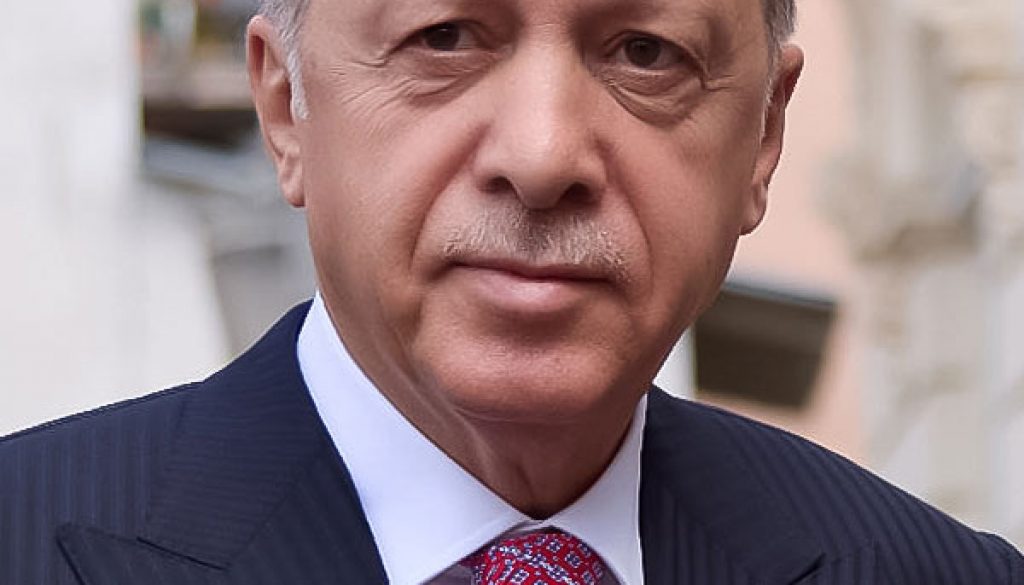
Recep_Tayyip_Erdogan-wb
April 17 2023

Could The Next 9/11 Originate In Turkey?

Turkey has become in the 21st century what Saudi Arabia was in the 20th:  A petri dish for extremism and an engine of support for global militancy.

By Michael Rubin

Prior to the September 11, 2001 terror attacks in New York and Washington, DC, Saudi Arabia was Teflon. Saudi leaders charmed their American counterparts. Both Democratic and Republican administrations waved off concerns about let alone consequences for Saudi support for radical Islamism by citing Washington’s security partnership with Riyadh. Much of the blindness, however, was willful. Generations of US diplomats and other senior officials saw Saudi Arabia as their golden parachute. To raise difficult questions was to walk away from a secure retirement.

 While the 9/11 Commission exposed warning signs the American intelligence community should have seen coming, it appears a generation later, American policymakers have not learned the lesson.

Turkey has become in the 21st century what Saudi Arabia was in the 20th:  A petri dish for extremism and an engine of support for global militancy.
 While Turkish leader Recep Tayyip Erdogan embraced moderation in his first years in power, it was an illusion. Consider this video of a young Erdogan listening to anti-American bile, or seeking advice at the foot of Afghan terrorist Gulbuddin Hekmatyar. Erdogan’s own statements prior to his rise to the premiership were a clear reflection of his true agenda. Erdogan’s pro-Western, moderate phrase was the exception, not the rule.
 While presidents from George W. Bush to Donald Trump saw in Erdogan a partner, Erdogan’s actions suggest a different agenda.

Secret phone taps suggested that Erdogan’s office helped arm Islamist militants in Nigeria. Many would argue that the linkages between Erdogan’s administration and the Islamic State are as great if not greater than those between Saudi officials and Al Qaeda prior to the attacks on the World Trade Center. When Turkish proxies took over northern Syrian districts like Afrin from local Kurdish authorities, they transformed them into the country’s most radical recruiting grounds. This should not surprise: Erdogan and his followers framed the Turkish invasion of northern Syria in religious context.

Press coverage of recent leaks of classified documents focus on Ukraine, but as important are revelations the Wagner Group sought weaponry from Turkey. Whether Turkey obliged remains classified, but is likely; Turkey certainly did not blow the whistle on the Kremlin.
 During the last decades of the 20th century, Saudi charities supported a global network of mosques and madrasas [religious seminaries]. Turkey today does likewise. While Erdogan promotes his efforts to dismantle the educational and institutional network of ally-turned-adversary Fethullah Gülen, whom he accused of being a terrorist, he omits that he has simply replaced the promotion of Gülen’s Anatolian-colored Sufism with his own Muslim Brotherhood-inspired extremism in the same institutions, especially in Africa.

Turkey continues to get a free pass at the highest level of government. Former US ambassadors and defense attaches to Turkey often do business inside Turkey, or for energy firms that seek to transport oil in pipelines across Turkey. Whereas once they denied Erdogan’s ties to militancy, the sheer quantity of evidence makes this impossible; instead, they point to Turkey’s NATO membership and supposed military importance. Many argue that to hold Turkey to account would be to drive it into the Russian or Chinese camps. That this is even a concern, however, exposes the rot at the root of the relationship.

Nor does ignoring behavior make it go away. That Turkey last week deliberately and knowingly launched a missile at a convoy carrying U.S. personnel and Syrian and Iraqi Kurdish allies involved in the Global Coalition against the Islamic State is a warning sign as great as Saudis seeking lessons on how to fly a plane but not land one.

To be clear, Erdogan himself may not directly plot against the United States. He may believe—like Saudi Arabia’s King Fahd—that he could control and channel the forces of extremism to his benefit. He is wrong. Once unleashed, such radicalism and extremism is not easily contained. The question American policymakers must now consider is whether they are today in with Turkey repeating the mistakes of U.S.-Saudi relations in the late 20th century, and whether those providing cover to Turkey’s malfeasance within the White House, State Department, Pentagon and think tank community are preserving a relationship crucial to U.S. national security or inadvertently enabling the same impunity Saudi Arabia enjoyed prior to 9/11.

This article was first published in the 19fortyfive.com on April 14, 2023.

The hope endures! We keep fighting for Justice for Cyprus! IMPORTANT UPDATES for the 38th Annual PSEKA Cyprus Conference in Washington DC – May 9-11, 2023

Recent Posts

  • Kyrenia_Limani_1967Where do our borders begin and where do they end?
    August 6, 2026
  • philip-christopher-cov-webMessage from Philip Christopher
    August 6, 2026
  • F-35-flightTransfer of F35s to Turkey Poses Clear and Present Danger
    July 21, 2026
  • pseka-logo-coverTrump Appeasement of Turkey Spells Disaster!
    July 16, 2026
  • 41-PSEKA-conference-wb41st annual PSEKA Cyprus Conference included a dynamic panel discussion devoted to Cyprus energy, commerce and trade  
    June 18, 2026
  • 41-PSEKA-conference-wbCyprus Minister of Energy, Commerce and Industry Michael Damianos Addresses Productive PSEKA Cyprus Conference in Washington, D.C.
    June 15, 2026
  • Members-Congress-Letter-to-Trump---1-wbMembers of Congress Send Letter to President Trump on U.S.–Turkey Security Concerns
    June 4, 2026
  • PSEKA-CYPRUS-CONFERENCE-2026-WB41st Annual PSEKA Cyprus Conference – Washington, D.C. – June 9-11, 2026
    May 8, 2026
  • pseka-logo-coverTurkey, the New Iran
    April 14, 2026
Back To Top
PSEKA
Privacy policy

© 2026 PSEKA
All rights reserved.
This website uses cookies to ensure you get the best experience on our site. To understand more about how we use cookies, please see our Privacy Policy.
Cookie settingsACCEPT
Manage consent

Privacy Overview

This website uses cookies to improve your experience while you navigate through the website. Out of these, the cookies that are categorized as necessary are stored on your browser as they are essential for the working of basic functionalities of the website. We also use third-party cookies that help us analyze and understand how you use this website. These cookies will be stored in your browser only with your consent. You also have the option to opt-out of these cookies. But opting out of some of these cookies may affect your browsing experience.
Necessary
Always Enabled
Necessary cookies are absolutely essential for the website to function properly. This category only includes cookies that ensures basic functionalities and security features of the website. These cookies do not store any personal information.
Non-necessary
Any cookies that may not be particularly necessary for the website to function and is used specifically to collect user personal data via analytics, ads, other embedded contents are termed as non-necessary cookies. It is mandatory to procure user consent prior to running these cookies on your website.
SAVE & ACCEPT